
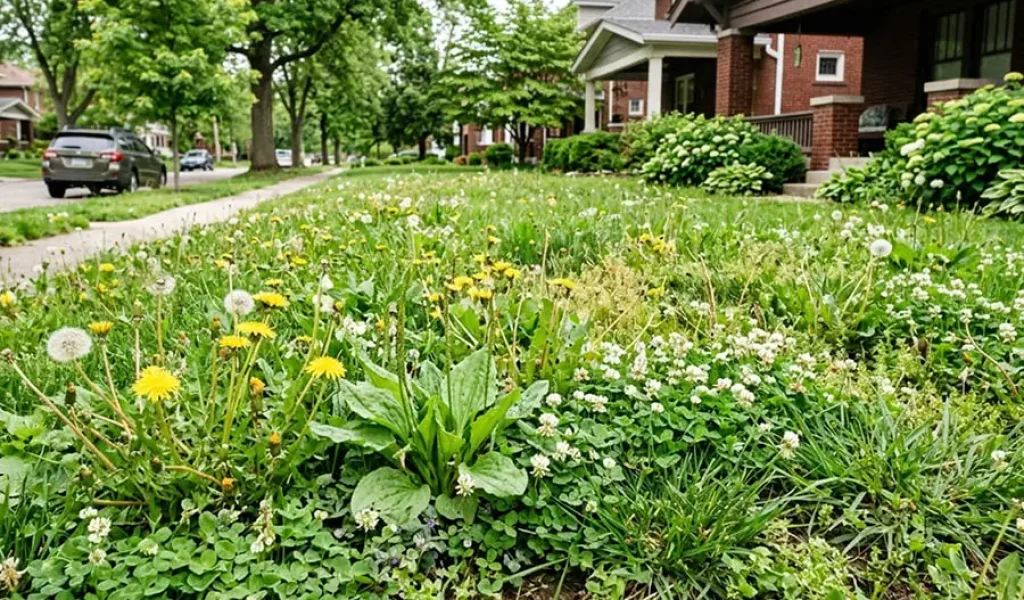
Every spring and summer, we get calls from homeowners in Indianapolis, Carmel, and Fishers who are frustrated with weeds in their yard, even after working with what they believed were the best lawn care services in the area.
The grass looks patchy, and something keeps taking over your lawn. Just last week, we worked on a lawn care program in Greenwood where the homeowner thought they had crabgrass, but it turned out to be nutsedge growing in moist areas.
That mix-up matters more than most people think. Using the wrong products to control the wrong weed can waste time, money, and even harm the rest of your lawn. After doing this for decades across Indiana lawns, one thing stands out. You have to know what you are dealing with before you try to fix it.
What Happens If You Treat The Wrong Weed?
The Problem Gets Worse
When weeds are hard to identify, many people grab a general weed control product and hope for the best. But different types of weeds react in different ways.
Wrong treatment choice
A product made for broadleaf weeds will not work on a grassy weed like crabgrass or foxtail.
Weed spreads faster
Some weeds can produce thousands of seeds, and bad treatment gives them more time to sprout and spread.
Damage to your lawn
Using the wrong mix can stress your grass and weaken the root system.
We just saw this in a Fishers property where spurge can take root close to the ground. It spread quickly because it was mistaken for another plant.
How Do Weeds Grow So Fast In Indiana Lawns?
Local Conditions Make A Big Difference
Indiana lawns deal with wet or dry soils, and weeds love both. Some grow in shady spots, while others take over in dry soils.
Moist areas: Nutsedge and ground ivy is a perennial that thrive in damp soil.
Dry soils: Crabgrass and foxtail are annuals that grow faster in heat.
Shady spaces: Broadleaf plants like white clover and ground ivy spread with slender vines that grow outward.
Many of these weeds are found in nearly all climates across the United States, which makes them even harder to control.
What Are The Most Common Weeds Found In Indianapolis?
Common Types Of Weeds We See Every Day
After years in lawn care, we can help you identify the most common weeds in Indiana lawns pretty quickly.
- Dandelion: A perennial broadleaf weed with a yellow flower and a deep taproot.
- Crabgrass: A grassy weed often mistaken for real grass when it starts.
- White clover: Known for its rounded mound of leaves and small white blooms.
- Thistle: Can grow up to 3 feet tall with sharp edges and purple flowers.
- Ground ivy: A fast-growing perennial with scalloped edges and purple flowers in May.
- Foxtail: Resembles a fox’s tail and is often found in clusters.
Each one has a different stem, leaf shape, and root system. That is how we identify them and choose the proper weed control plan.
Why Does Proper Weed Identification Matter So Much?
It Helps You Choose The Right Solution
Weeds are classified into annual weeds, perennial weeds, and winter annual broadleaf weeds. Each group behaves differently.
Annual weed: Grows from seed and dies in one season, but can produce thousands of seeds.
Perennial weed: Comes back year after year because of a strong root system.
Broadleaf vs grassy weed: Broadleaf has wide leaves, while grassy weed blends into turf.
If you skip this step, the weed may lie dormant for 10 years and come back stronger.
We recently treated a lawn in Carmel where a plant can produce new growth from its root system. Without proper ID, that weed would have kept coming back.
How Do We Identify Weeds The Right Way?
Our Step-by-Step Approach
At Warweg & Co., Inc., we take a hands-on approach to every lawn.
Visual inspection
We look at green leaves, stem shape, and color, like dark green or light green.
Growth pattern
Some weeds grow low to the ground, while others form a cluster or grow tall.
Root check
Many weeds are identified by their root systems, like a taproot or spreading roots.
Location clues
Where it grows matters. Moist, shady, or dry spots tell us a lot.
We just did this on a Franklin property where ground ivy was spreading through the flowers to blossom clusters. Once identified, we used the right products to control it fast.
Can Proper Weed Control Protect The Rest Of Your Lawn?
Proper weed control does more than just remove weeds. It helps protect healthy grass by stopping aggressive weed growth that steals nutrients, water, and sunlight.
It also prevents spread by stopping weed seeds before they take root and grow quickly across your lawn.
When done the right way, a solid lawn care program keeps weeds from taking over your lawn and helps your grass stay thick, even, and green. Over time, this leads to a stronger lawn that can better fight off new weeds on its own.
Frequently Asked Questions About Lawn Service
Do I need to identify a weed before treating it?
Yes. Different weeds need different treatments, and using the wrong one will not work well.
Can weeds come back after treatment?
Yes. Many perennial weeds grow back from their root system if not treated properly.
Will weed control help my lawn grow better?
Yes. Removing weeds gives your grass more space, water, and nutrients to grow strong.
Ready To Take Control Of Weeds The Right Way?
We have seen just about every weed that can show up in Indianapolis and nearby areas. From crabgrass in dry soils to ground ivy in shady corners, each one needs the right plan.
Skipping identification leads to wasted effort and more weeds later, especially when early prevention and proper timing are overlooked. At Warweg & Co., Inc., we take the time to identify, treat, and protect your lawn the right way.
If you want to get rid of weeds and keep your lawn looking its best, give us a call today at (317) 885-8983. We would be happy to help you build a lawn care program that works for your property.