
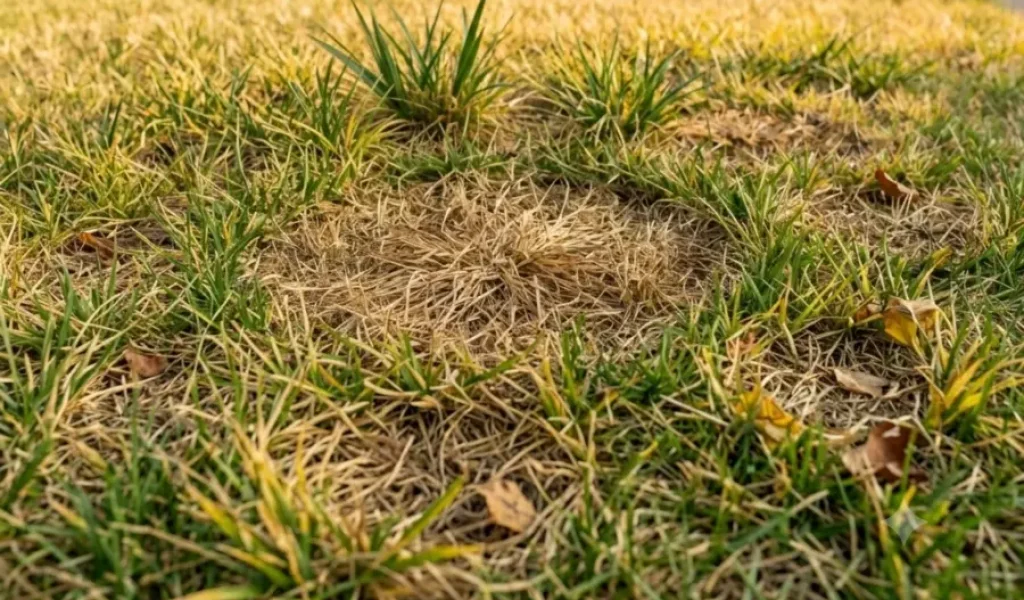
One day, your lawn looks green and healthy. Then, a few days later, strange brown spots pop up across the grass like somebody dropped coffee mugs all over the yard. We get calls about this every year across Indianapolis, Carmel, Fishers, Greenwood, and Franklin.
Most homeowners think the grass just needs more water, but that is usually not the real problem. Even homeowners working with an affordable lawn care company are often surprised to learn that lawn fungus and turf disease, not drought, are causing the damage.
We were just at a home in Fishers last week, where the homeowner watered every single day, trying to fix a brown patch problem. The extra water actually made the lawn fungus spread faster. In Indiana’s humid weather, too much water and high humidity can turn your turf into a breeding ground for fungal trouble.
A lot of these lawn issues show up during late spring through early fall when cooler temps at night mix with warm daytime temp swings. Heavy dew sits on the grass in the morning, air movement slows down, and fungus starts growing fast. That is when many common lawn diseases begin to spread through cool-season turfgrass like Kentucky bluegrass, tall fescue, and perennial ryegrass.
What Causes Circular Brown Patches in an Indianapolis Lawn?
Most circular brown spots come from a lawn disease or turf disease caused by fungal activity. Indianapolis lawns deal with humid conditions all summer long, and that creates ideal conditions for fungus.
Brown Patch Fungus Loves Warm and Wet Conditions
Brown patch is one of the five most common lawn diseases in Indiana. It often attacks tall fescue and perennial ryegrass during hot nights with high humidity. The grass blades turn brown and thin out fast.
High Humidity creates wet grass blades overnight and helps fungal spores spread across the turf.
Overwatering keeps the soil damp too long and gives lawn fungus the moisture it wants.
Poor Drainage traps water in compact soil and weakens healthy turf.
Dollar Spot and Leaf Spot Also Spread Fast
Dollar spot causes small brown circles across the lawn. Leaf spot creates discoloration and damaged grass blades that later turn brown.
We just treated a lawn in Carmel where dollar spot spread across the front yard after several weeks of heavy dew, mowing, and watering at the wrong times. Once the grass became infected, the outbreak moved quickly.
Why Does Lawn Fungus Hit Indiana Lawns So Hard?
Indiana’s weather gives fungus exactly what it needs. Warm days, cool conditions at night, and wet grass in the morning create trouble for cool-season grass.
Cool Season Turfgrass Gets Stressed
Kentucky bluegrass, fescue, and perennial ryegrass are popular because they stay green during spring and fall. But they can struggle during the summer patch season.
Drought Stress weakens the roots and makes grass disease spread more easily.
Compaction keeps roots from getting oxygen and hurts soil health.
Thatch build-up traps moisture near the turf surface and feeds fungal growth.
Lawn Care Habits Can Make the Problem Worse
Many homeowners mow too short during the summer. That stresses the grass and exposes the soil to heat.
Mow at the Proper Height so the turfgrass stays thicker and stronger.
Slow-release nitrogen helps feed the lawn steadily without causing extra stress.
Make Sure Your Lawn Gets Proper Inches of Water instead of watering every day.
At Warweg & Co., Inc., we often see lawns damaged more by overwatering than by underwatering. A healthy irrigation plan matters just as much as proper treatment.
How Do We Diagnose Brown Spots and Lawn Disease?
Every brown lawn does not have the same problem. Some lawns have fungus. Others deal with pest damage, compact soil, or irrigation trouble.
Accurate Diagnosis Matters
We look closely at the grass type, moisture levels, mowing patterns, and signs of fungal disease before starting treatment.
We recently checked a lawn in Greenwood where the homeowner thought they had summer patch. After testing the turf, we found irrigation heads soaking one area too heavily. The wet conditions caused brown patch fungus to spread.
Purdue University and the Purdue State Chemist’s Office both share expert tips about common lawn diseases in Indiana. We follow proven lawn care methods that fit Indiana’s soil and weather patterns.
Fungicide Is Sometimes Needed
A fungicide can help stop the spread of fungi when action is taken early enough. Timing matters a lot.
Early Action helps prevent spores from spreading across healthy turf.
Proper Treatment depends on the type of grass disease and weather conditions.
Aeration improves air movement and reduces compaction in the soil.
Can You Prevent Brown Patch and Lawn Fungus?
Yes, many lawn fungus problems can be reduced with better lawn care habits.
Healthy Turf Starts with Good Watering
Your irrigation system should water deeply but not constantly. Watering early in the morning helps the grass dry during the day.
We just adjusted several irrigation systems in Indianapolis after seeing homeowners water late at night. Wet grass overnight creates ideal conditions for brown patch and red thread fungus.
Many homeowners also ask how often other lawn treatments should be scheduled throughout the season. If you are trying to build a healthier lawn overall, our guide on how often weed control treatments should be applied during the growing season explains how proper treatment timing can support stronger, more resilient turf.
Strong Grass Fights Disease Better
Healthy turf can handle stress better than weak turf.
Soil Health supports deeper roots and stronger grass growth.
Aeration and Overseeding help lawns recover from thin or damaged areas.
Balanced Nutrient Levels keep turfgrass healthy during summer heat.
Warm-season grasses like bermudagrass and augustinegrass handle heat differently, but most Indiana lawns use cool-season varieties that need extra care during humid months.
Why Homeowners Call Warweg & Co., Inc.
At Warweg & Co., Inc., we have worked on Indiana lawns since 1990. We have seen almost every lawn disease Indianapolis weather can throw at a yard. From brown patch to leaf spot to red thread, we help homeowners stop the spread before the whole lawn turns brown.
Our team checks irrigation, mowing habits, soil conditions, and turf health to find the real cause of the problem. We do not guess. We look for answers that fit your lawn and your property.
Frequently Asked Questions About Affordable Lawn Care
1. Can brown patch fungus spread to my whole lawn?
Yes. Brown patch fungus can spread quickly during humid conditions and warm nights. Fast treatment and proper watering help slow the outbreak.
2. Can overwatering cause lawn fungus?
Yes. Too much water creates wet soil and heavy moisture on the grass blades. That gives fungal spores the perfect place to grow.
3. Can a lawn recover after turf disease?
Yes. Most lawns can recover with proper treatment, healthy mowing habits, and better soil health. Some damaged spots may need overseeding or aeration to fill back in.
Bring Your Lawn Back to Life
Brown spots spreading across your lawn can feel frustrating fast. But most lawn fungus and turf disease problems can improve with accurate diagnosis, proper watering, and the right lawn care plan.
Homeowners interested in learning more about turf health and lawn management can explore resources from the Purdue Extension Turf Program for research-based lawn care information. Catching the problem early gives your grass a much better chance to recover.
If your Indianapolis lawn has brown patch, dollar spot, summer patch, or other lawn issues, call Warweg & Co., Inc. at (317) 885-8983. We are happy to inspect your turf, check your irrigation system, and help bring back a healthy green lawn.