
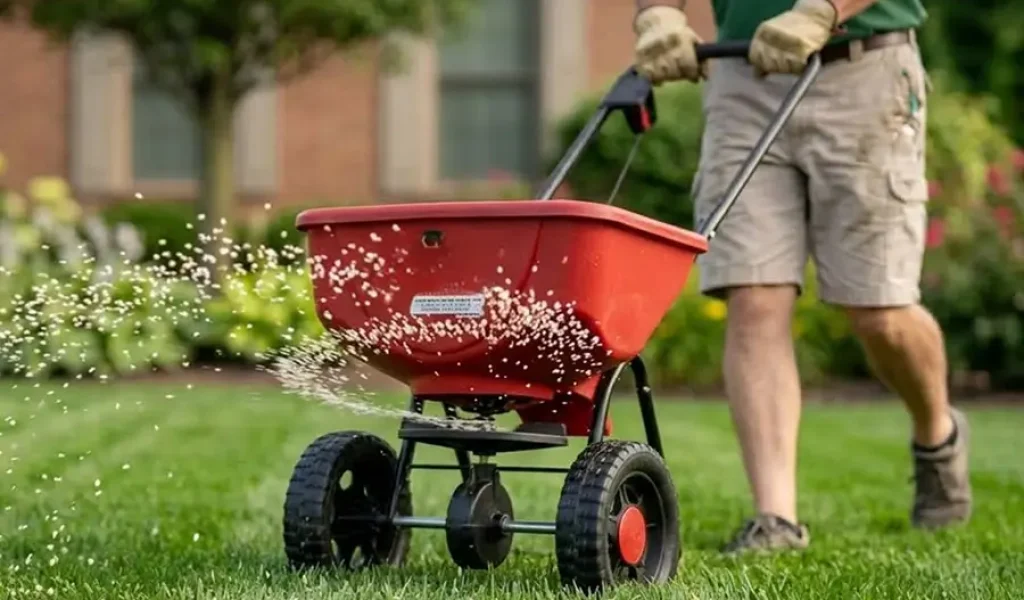
Winter in Indianapolis can be rough on turf. Snow, ice, and weeks of cold leave lawns looking Winter in Indianapolis can be rough on turf. Snow, ice, and weeks of cold leave lawns looking thin, pale, and tired.
By March, many yards in Carmel and Fishers look browner than green. That’s when homeowners begin calling our office to ask about lawn fertilization and weed control services, wondering if early treatment will help wake the lawn up and bring it back to life.
After more than three decades serving Central Indiana at Warweg & Co., Inc., I can say the answer is not always simple. Early fertilization can help, but only if it is done the right way and at the right time.
Does Early Fertilization Really Help Lawns Bounce Back?
What Happens to Grass During Winter?
Grass does not die in winter. It goes dormant. That means it slows down growth to survive the cold. In places like Greenwood and Franklin, we often see damage from heavy snow piles and foot traffic over frozen turf.
We just looked at a lawn in Carmel last week where the snow mold left light gray patches across the yard. The grass was alive, but weak. That is winter stress.
Dormancy
Grass rests during cold months, and pushing growth too early can do more harm than good.
Root Health
Roots are the engine of the lawn. If the soil is still cold, roots cannot take in nutrients well.
When Is the Right Time to Fertilize in Indianapolis?
Soil temperature is more important than the calendar. In Central Indiana, soil usually warms up enough in early to mid-April.
If you fertilize too early in March, the grass may grow fast on top while the roots stay weak. That can lead to thin turf later in May when the heat arrives.
At Warweg & Co., Inc., we test soil and watch weather patterns. We just applied our first round of lawn fertilization in Fishers after a stretch of warmer days. The soil hit that sweet spot where roots can feed.
What Are the Risks of Fertilizing Too Early?
Many homeowners think more fertilizer means faster green-up. That is not always true.
Can Early Feeding Cause Problems?
Top Growth Push
Too much nitrogen too early forces blades to grow fast before the roots are ready.
Disease Risk
Weak, fast growth can invite lawn diseases once spring rains hit Indianapolis.
Nutrient Runoff
If the ground is still frozen or soaked, fertilizer can wash away instead of feeding the turf.
I have seen lawns in Carmel turn bright green in April after early feeding, then struggle in June. The roots simply were not strong enough to handle the heat.
What Is the Best Approach for Spring Lawn Recovery?
A balanced plan works better than a quick fix.
Step1: Inspection
Before we apply anything, we walk the property. We look for compaction, salt damage from sidewalks, and thin spots. Every yard is different.
We just serviced a home in Greenwood where the front yard gets full sun, and the back yard stays shady. They needed two different approaches.
Step 2: Soil-Based Fertilization
Slow-Release Fertilizer
This feeds grass steadily over time instead of all at once.
Balanced Nutrients
A mix of nitrogen, phosphorus, and potassium supports both root and blade growth.
Weed Prevention
Early spring is also when we apply pre-emergent to stop crabgrass before it starts.
When done right, early fertilization helps lawns fill in faster and crowd out weeds. That means fewer problems in summer.
Does Early Fertilization Replace Other Spring Services?
No, it works best with other steps.
What Else Helps Lawns Recover?
Core Aeration
This opens up compacted clay soil, which is common in Central Indiana.
Overseeding
Adding seed to thin areas helps create a thicker lawn.
Proper Mowing
Keeping blades sharp and cutting at the right height protects new growth.
I have seen lawns in Franklin bounce back strong when we combine aeration with spring feeding. The difference is clear by May.
How Do Local Conditions Affect Fertilization?
Indianapolis has heavy clay soil in many neighborhoods. Clay holds water but drains slowly. That affects how nutrients move through the ground.
In Fishers, we often see newer homes with disturbed soil from construction. These lawns need careful feeding and sometimes extra soil work.
The weather also plays a role. A warm March followed by a hard freeze can shock new growth. That is why we plan treatments based on current conditions, not guesswork.
After doing this since the 90s, I have learned that patience pays off. Rushing fertilizer before the lawn is ready often leads to more work later.
Frequently Asked Questions About Lawn Fertilization and Weed Control
Can I fertilize my lawn in early March in Indianapolis?
No. The soil is usually too cold in early March for roots to absorb nutrients well.
Will early fertilization make my lawn green faster?
Yes. It can speed up green color, but if done too early, it may weaken root growth.
Is one spring fertilizer treatment enough for the whole year?
No. Lawns in Central Indiana need several treatments through the growing season to stay healthy and thick.
Early Fertilization Can Help, If Done Right
Early fertilization can help lawns recover from winter stress in Indianapolis, but timing and method matter. Feeding grass too soon can weaken roots and cause trouble later in the season.
A balanced plan that supports root growth, controls weeds, and matches local soil conditions makes a big difference. That’s why many homeowners start asking whether a custom lawn care plan can truly fix patchy grass and help restore a thicker, healthier lawn.
At Warweg & Co., Inc., we treat every lawn like it is our own. We have worked on thousands of properties across Carmel, Fishers, Greenwood, and Franklin. If your yard looks tired after winter, let us take a look and build a plan that fits your soil and your goals.
Call us at (317) 885 – 8983 to schedule your spring lawn evaluation. We would be glad to help your lawn recover and grow strong this season.