
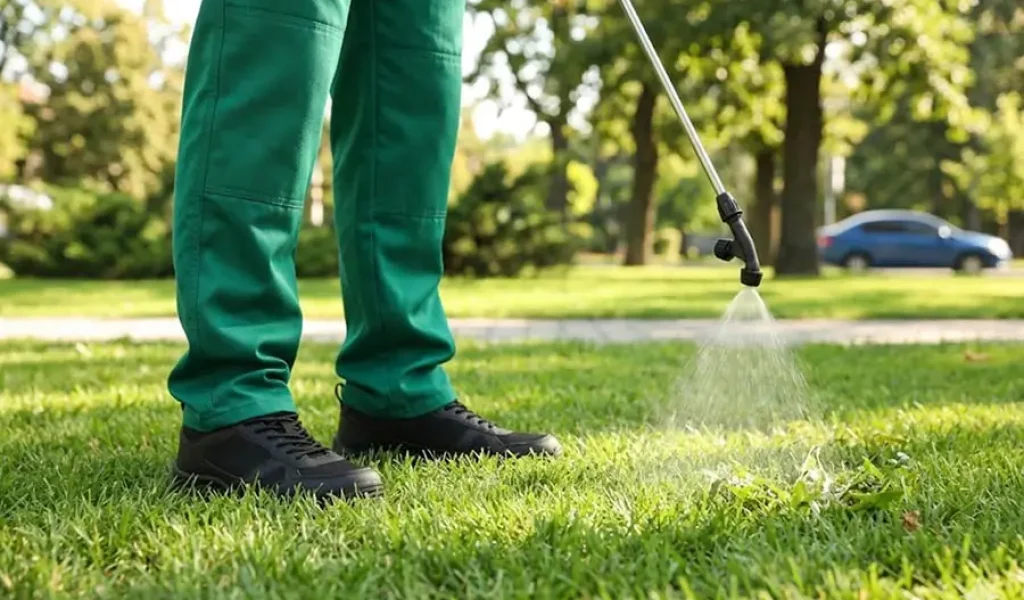
If you live in Central Indiana, you know how fast weeds can take over a yard. One minute, your grass looks thick and green. The next minute, crabgrass pops up like it owns the place. It’s a common issue many homeowners deal with before reaching out to a lawn service company near Indianapolis for help.
I see it every spring in Carmel, Fishers, Greenwood, and Franklin. A homeowner skips pre-emergent one year and calls us in June, asking why their lawn looks patchy and thin. The truth is simple. Timing matters more than most people think.
Pre-emergent herbicide is one of the best tools we use at Warweg & Co., Inc. But it only works if it is applied at the right time and often enough for Indiana weather.
How Often Should Pre-Emergent Be Applied In Indiana?
In most Indiana lawns, we apply pre-emergent herbicide two times per year.
Early Spring Application
Early spring treatment: We apply the first round when soil temperatures reach about 50 to 55 degrees. In Central Indiana, that usually falls between late March and mid-April.
This step targets crabgrass before it sprouts. Once crabgrass breaks through the soil, pre-emergent will not stop it. That is why we watch soil temps closely. We just treated several lawns in Fishers last week because the ground was warming up fast after a mild winter.
Late Summer Or Early Fall Application
Fall treatment: We apply a second round in late summer or early fall. This helps prevent winter annual weeds like henbit and chickweed.
Many homeowners skip this step. Then they call us in early spring, asking why purple flowers are taking over their yard. Those weeds started growing months earlier.
Two treatments per year give most lawns solid protection. Some properties with heavy weed pressure may need small adjustments, but two is the standard for our area.
Why Is Timing So Important In Central Indiana?
Indiana weather does not always follow the calendar. One year it is warm in March. The next year, we are still wearing heavy coats in April.
Soil Temperature Matters More Than Air Temperature
Soil temperature check: We do not guess. We track soil temperatures because crabgrass seeds start to germinate when the soil hits around 55 degrees.
Air can feel cool, but the soil might already be warm enough for weeds to start. We have seen this happen in Carmel, where a warm stretch in early April caused early germination.
If pre-emergent goes down too late, weeds win.
Heavy Spring Rains Can Break Down Product
Rain impact: Indiana springs can be wet. Too much rain can shorten the life of some products.
That is one reason we plan carefully. We choose the right product and rate for each lawn. Clay soil, which is common in our area, can also affect how long protection lasts.
Can You Apply Pre-Emergent Too Often?
More is not always better. Applying too much can stress your grass and may affect new seed growth.
Seeding And Pre-Emergent Do Not Mix Well
Seeding conflict: If you plan to seed bare spots in spring, pre-emergent can block grass seed from sprouting, too.
We always ask homeowners about their goals before we treat. If we are planning overseeding in the fall, we adjust our program so the grass has a fair chance to grow.
We just helped a family in Greenwood who wanted to thicken their lawn after tree removal. We timed their fall seeding carefully and held off on certain products to protect the new grass.
What Happens If You Skip A Year?
Skipping pre-emergent is like leaving your front door open during a storm. Weeds move in fast.
Weed Pressure Builds Over Time
Weed buildup: Each year that weeds are allowed to grow and drop seeds, the problem gets worse.
I have walked properties in Franklin where crabgrass covered half the yard. It took more than one season of proper care to bring those lawns back.
Pre-emergent does not fix everything overnight. It is part of a long-term lawn care plan.
How Do We Handle Pre-Emergent At Warweg & Co., Inc.?
We treat every yard like it belongs to our own family.
Custom Plan For Each Lawn
Property evaluation: Before we apply anything, we look at the grass type, soil condition, sun exposure, and past weed issues.
A lawn in Fishers with heavy shade will need a different plan than a sunny property in Carmel.
Professional Application
Proper coverage: Even coverage matters. Too light and weeds slip through. Too heavy, and the grass can struggle.
Our trained team uses calibrated equipment so the product is spread evenly. We just completed several irrigation start-ups this week, and while we were there, we checked treated areas to make sure coverage looked good.
Ongoing Monitoring
Follow-up visits: We keep an eye on results. If we see an early breakthrough, we adjust.
That hands-on attention makes a big difference over time.
Frequently Asked Questions About Lawn Service
Should pre-emergent be applied more than twice a year in Indiana?
No. Most lawns only need two applications, one in spring and one in fall, for solid weed control.
Can pre-emergent stop weeds that are already growing?
No. It only prevents new weeds from sprouting, so timing before germination is very important.
Is pre-emergent safe for established grass?
Yes. When applied at the correct rate by trained professionals, it is safe for healthy, established lawns.
Protect Your Lawn The Right Way
In Indiana, pre-emergent herbicides should usually be applied twice per year. One application in early spring and one in late summer or early fall gives strong protection against common weeds.
The key is timing, proper rates, and knowing local soil and weather patterns, much like understanding why aeration becomes less effective when done at the wrong time or under poor soil conditions. After working on lawns across Central Indiana for decades, I can say that skipping or guessing rarely works out well.
If your lawn in Carmel, Fishers, Greenwood, or Franklin needs help staying ahead of weeds, give us a call at Warweg & Co., Inc. We would be glad to look at your property and set up a plan that fits your yard and your goals. Contact us today at (317) 885-8983 to keep your grass thick and clean this season.